Michael Joseph Little
  • My Blogs
    • Impact Stories >
      • Navy Retirement Ceremony
      • Great American Patriot Award
      • Kentucky Colonel
      • Honorary USN Chief Petty Officer
      • Honorary USCG Chief Petty Officer
      • Honorary CWO4
      • My Navy Career (18 Years and 2 Days)
      • Ancient & Honorable Order of Turtles
      • The Little Family Farm
      • USS Wasp (CV 7)
      • Veterans Day 2017
      • South Crouch Township
      • Little Family Stories >
        • HSC Elizabeth A Little (Advancement)
        • HSC Elizabeth A Little, USCG (Ret)
        • William's Baptism
        • Mary's Baptism
        • William & Mary School Stuff
    • Professional Work
    • Personal Blog
    • 14 Year Battle Against the Navy >
      • CRSC Guide (gpt)
  • Sea Service Family, Consulting
  • Sea Service Family, Foundation
  • Contact Me
"No Veteran Left Behind"

My Fight for Justice: The Long Road to CRSC and Medical Retirement


This page documents my fight to correct my military record after combat-related PTSD was dismissed, my request for help was ignored, and I was forced to spend years proving what should have been recognized from the beginning.

When I came home from war, I did what the military teaches every service member to do: I asked for help.

Instead of receiving the support that many believe exists for returning veterans, I encountered a system that was not prepared to deal with the invisible wounds of combat. My requests for help were not treated as the beginning of a medical recovery process. Instead, they set off a chain of events that nearly ended my career with a recommendation for a dishonorable discharge.

At the time, I was struggling with the effects of combat deployments to Iraq and Afghanistan. My service included detainee operations where I faced constant threats, violence, and conditions that left lasting psychological injuries. Medical evaluations later confirmed diagnoses of Post-Traumatic Stress Disorder and depressive disorder related to my service. 

Despite clear documentation of these conditions, the Navy initially determined that I was fit for continued service, denying my request to be placed on the Temporary Disability Retired List. 

This decision did not reflect the reality of what I was experiencing or the medical evidence provided by my doctors. I appealed the findings and continued to fight for recognition of my injuries.

In 2016, my petition for relief was denied again, with the board stating that the evidence did not show my conditions prevented me from serving in the Naval Reserve. 

But I did not give up.

For years, I continued to pursue every legal and administrative avenue available to correct the record. That meant filing appeals, gathering medical evidence, requesting records under the Freedom of Information Act, and working through the Board for Correction of Naval Records.

The fight was long, frustrating, and at times discouraging, but I believed the truth would eventually prevail.
Finally, after years of persistence, the Navy corrected my record and placed me on the Temporary Disability Retired List at a 50 percent disability rating effective April 25, 2016.

​This correction was more than just a change to paperwork. It was recognition that the injuries I carried home from combat were real and deserved to be treated with the same seriousness as any physical wound.

Following my placement on the Temporary Disability Retired List (TDRL), my case continued through the disability evaluation process. During this review, the Navy evaluated the long-term impact of my service-connected conditions and ultimately determined that my Post-Traumatic Stress Disorder was permanent in nature.

As a result, I was permanently retired from the Navy and placed on the Permanent Disability Retired List (PDRL) with a 100 percent disability rating for PTSD. This decision finally acknowledged the full extent of the psychological injuries that resulted from my combat service.
However, the fight was not over.

After my retirement status was corrected, I applied for Combat-Related Special Compensation (CRSC), a program intended to recognize disabilities that are directly connected to combat service. Given the documented nature of my deployments and the medical evidence linking my PTSD to those experiences, I believed the approval of CRSC would be straightforward.

Instead, my claim was initially denied.

Once again, I found myself facing a decision that did not reflect the reality of my service or the evidence supporting my case. Rather than accept the denial, I challenged the decision and continued pushing for the recognition that should have been granted from the beginning.
After further review and continued advocacy, the decision was reversed.

The Navy ultimately approved my Combat-Related Special Compensation at 100 percent for PTSD, recognizing that my condition was directly related to my combat service. Even more importantly, the approval was made retroactive to 2014, acknowledging that the injuries connected to my deployments had been present long before the system finally recognized them.

With that decision, a fourteen-year fight finally came to an end.

What began as a simple request for help after returning from war had turned into more than a decade of appeals, legal filings, and persistence. In the end, the record was corrected, the truth was recognized, and the sacrifices made by the sailors I served alongside were finally acknowledged in the way they deserved.

For many veterans, the battle does not end when we return home from war. Sometimes the fight simply changes shape.

My story is not unique. Across the country, many service members return from combat carrying invisible wounds that take years to fully understand and even longer to have properly recognized. The systems designed to support veterans are often complicated, slow, and difficult to navigate, especially for those already struggling with the effects of service.

If there is one lesson I hope other veterans take from my experience, it is this: do not give up.

Denials are not always the end of the story. Records can be corrected. Decisions can be challenged. The truth can eventually find its way through the process, even when it takes far longer than it should.

My case took fourteen years to resolve. That is more than 5,000 days of appeals, filings, and persistence.

In the end, the recognition was not just about benefits or compensation. It was about accountability, acknowledgment, and ensuring that the sacrifices made by the sailors I served alongside were not dismissed or forgotten.

If sharing this story helps even one veteran continue their fight, then those fourteen years will have meant something beyond my own case.

Because no veteran should ever feel like they have to fight this battle alone.

​Why I Share This Story

I created this website to document my experience for one reason: to help other veterans who find themselves trapped in the same system.

Many service members are told “no” the first time they apply for disability retirement or Combat-Related Special Compensation. Some are told their injuries are not severe enough, not connected to service, or that they are still capable of serving.

My experience shows that the first answer is not always the correct one.

If you believe your record contains an error or injustice, do not stop after the first denial. The process exists for a reason, and persistence matters.

​I fought for years to correct my record. In the end, the evidence spoke for itself.
Detailed Timeline

"I Proudly Served My Countries Navy Combat Team with Honor, Courage & Commitment!"
Picture
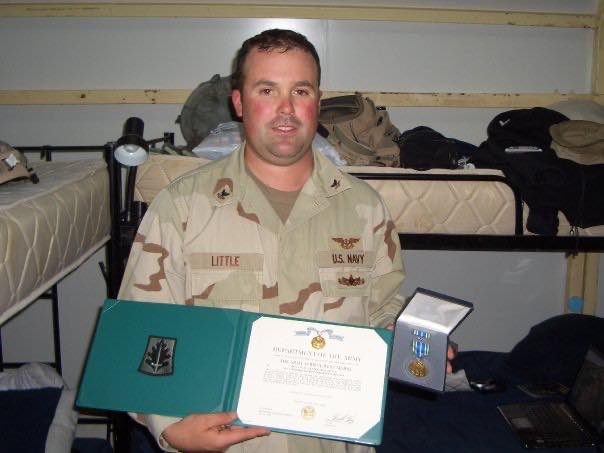
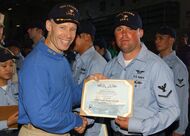
Being presented the Enlisted Surface Warfare Specialist (ESWS) device aboard the USS Tarawa (LHA 1) during WestPac 2005.
Picture
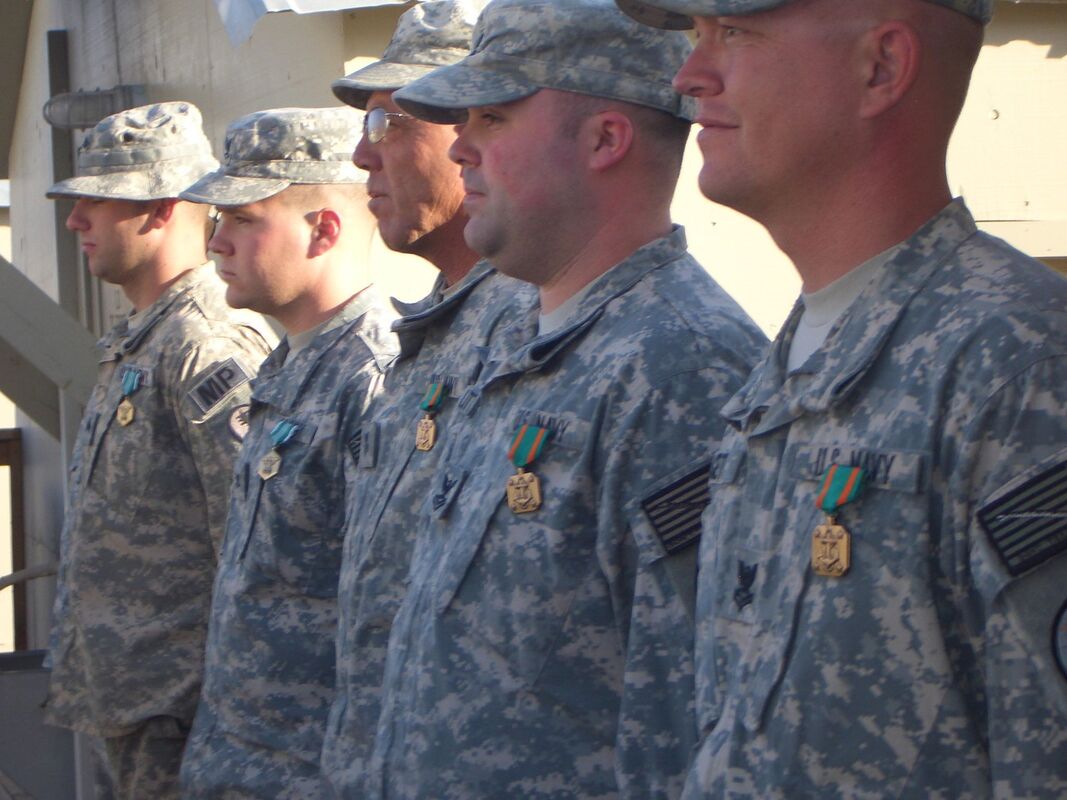
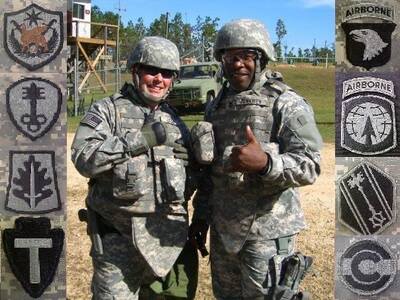
After being awarded the Army Achievement Medal and Combat Patches prior to departing Iraq in May 2009.
Picture
Being awarded the Army Commendation Medal & Navy Achievement Medal prior to departing Afghanistan in 2010.
Picture
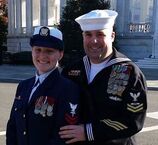
Last time wearing uniform with his spouse HS1 Elizabeth Little (USCG), at the National Veterans Day Ceremony at Arlington National Cemetery November 11, 2014.

Picture
Follow my blog as this case progresses

If You Are Fighting This Battle

If you are currently going through the CRSC or BCNR process, I know how frustrating and exhausting it can be. There were many times over the last fourteen years where I felt like giving up, and there were moments where it seemed like the system simply did not want to listen.

​If you are trying to navigate this process on your own and have questions, feel free to reach out to me. I am not a lawyer, but after spending more than a decade fighting this battle I am always willing to share what I learned and help point fellow veterans in the right direction.

If you decide that you need legal representation, I strongly encourage you to research your options carefully. There are good attorneys who genuinely want to help veterans, but there are also firms that charge large fees or take a percentage of your award. Make sure you understand the fee structure and the attorney’s experience with BCNR and CRSC cases before signing anything.

One attorney I can personally recommend is listed below. She represented me in my case and was fair, professional, and committed to seeing the process through.

​LTCOL Aniela Szymanski, USMCR, is a civilian attorney who represented me in my CRSC case and was very reasonable to work with throughout the process. Her rate is $150 per hour, she does not require money up front, does not take a percentage of your award, and is willing to work with clients on payment plans. If you are interested in contacting her, you can reach her by email at [email protected] or visit her website at https://anielalaw.com/. (**Please be aware that she is currently deployed, so it may take a little time for her to respond.)

​
I’ve known Aniela for a number of years. We originally met when she was working at MOAA and I was working at another veterans service organization. We reconnected years later, and during a conversation I mentioned my BCNR case. That’s when she told me she handles these cases.

Before that, I had contacted probably 20 different law firms that say they handle BCNR cases. At the time I was in the IRR and about to be discharged with no ability to reenlist and no chance at retirement. Most of the firms I spoke with wanted between $5,000 and $10,000 up front because BCNR cases are considered a long shot. Then they wanted another $10,000 to $15,000 after the case was over, win or lose.

Aniela ended up representing me for about 7 years. During that time she handled two BCNR appeals and two CRSC appeals for me. In total I paid right around $5,000, and she allowed me to pay it over time.

When we filed the last CRSC appeal we fully expected another denial and were already preparing to take the case to the Court of Federal Claims. We probably had about 40 hours into planning that lawsuit when we found out the CRSC appeal had been approved less than 30 days after filing.

She deleted those hours from the bill.

These cases do take real time and effort to prepare, so hiring a lawyer will cost something. I just want people to know there are reasonable options out there. In my experience, most VSOs are overwhelmed and don’t have time to dedicate to cases like this, and the big pro bono firms often can’t give you the attention you need.

I’m not telling anyone they need a lawyer. If you want to try it on your own, absolutely do it. But if you reach the point where you’re ready to give up, make sure you hire someone who isn’t going to take advantage of you.

The Major Richard Star Act

H.R.2102 - Major Richard Star Act
S.1032 - Major Richard Star Act
While my case has finally been resolved, there is still one piece of unfinished business that affects thousands of medically retired combat veterans across the country.

Under current law, veterans who are medically retired with less than 20 years of service cannot receive both their military retirement pay and their VA disability compensation at the same time. Instead, their retirement pay is reduced dollar-for-dollar by the amount of VA disability compensation they receive.

This policy is known as the VA offset, and it disproportionately affects combat-wounded veterans who were forced to retire early because of injuries sustained in service.

The Major Richard Star Act would correct this injustice.

Named after Major Richard Star, a decorated Army combat veteran who fought for this change until his passing in 2021, the legislation would allow medically retired combat veterans to receive both their earned retirement pay and their VA disability compensation without penalty.
In simple terms, it would allow combat-wounded veterans to receive the full retirement benefits they earned through their service.
For veterans like me, who were medically retired because of combat-related injuries, the law would restore retirement pay that was earned through years of service but is currently withheld under the offset.

Passing the Major Richard Star Act would not create a new benefit. It would simply restore fairness to the system and recognize that combat-wounded veterans should not be financially penalized for injuries sustained while serving their country.

While my personal battle for recognition has finally come to an end, this issue remains unresolved for thousands of other veterans.

If Congress ultimately passes the Major Richard Star Act, it will be more than a financial correction. It will be a long overdue acknowledgment that the sacrifices of combat-wounded veterans should be honored, not offset.

​Veterans and their families across the country are still waiting for this correction. If you believe combat-wounded veterans should receive the retirement pay they earned, I encourage you to learn more about the Major Richard Star Act and contact your members of Congress to support its passage.
Tell Congress to Act on the Major Richard Star Act
"There are no great men, only great challenges that ordinary men are forced by circumstances to meet."   
Fleet Admiral William Frederick Halsey Jr.
Chat Directly With Mike ×

Connecting

You: ::content::
::agent_name:: ::content::
::content::
::content::